
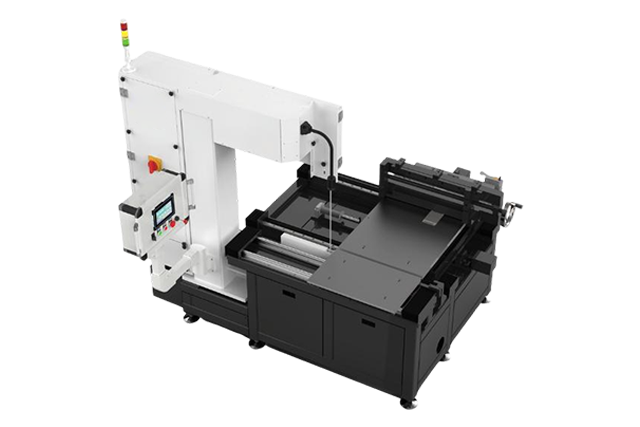
1. Difference Between Diamond Wire Saw and Regular Sawing
There are many similarities between diamond wire saw vs regular sawing.
As mentioned earlier both techniques work by removing material with mechanical cutting.
Only the types of cutting tool used and machine design differ.
Diamond wire saws use a thin wire that holds industrial diamond abrasive on it’s surface.
Where as traditional saws will use different saw blade designs. Such as blade saws, disc saws or band saws.
So as you can see there are pros and cons to each method.
Diamond wire sawing excels at cutting brittle and hard materials.
It has become popular in cutting silicon, SiC, Sapphire and other ceramic materials.
Regular sawing techniques are still very popular when sawing metals, wood and many other materials in everyday industry.
There are many types of traditional sawing as well so you cannot just compare all of them to diamond wire.
There is a big difference between a diamond blade and a normal toothed blade.
So when making this comparison we need to look at the machines and not only the cutting tool.
When producing semiconductor wafers there are many benefits that diamond wire has to offer.
Narrow kerf, slicing many wafers at once and the ability to cut brittle materials.
Regular sawing will be cheaper for many sawing operations as well.
The main difference is the cutting tool used. Diamond wire saws use a wire and traditional saws use a rigid saw blade.
2. Diamond Wire Sawing
Diamond wire sawing works by using diamond abrasive wire.
The wire is fed over the material being cut and tension is applied to it.
Diamond abrasive on the wire will chip away the material.
Which allows diamond wire sawing to cut very hard materials.
Here is a list of some of the materials that diamond wire saw machines cut.
- Mono silicon
- Poly silicon
- SiC
- Sapphire
- Quartz
- Glass
- Graphite
- Ceramics
- Optical Crystals
There are many ways to configure a diamond wire saw machine.
You can use a single wire for cutting or you can use multiple wires.
With multiwire diamond saws you can slice many wafers at once.
Which is why diamond wire saws are so useful when cutting silicon wafers.
3. Regular Sawing
When describing regular sawing we are referring to any saw that uses a blade.
This could be a rigid saw blade or flexible saw blade (band).
Traditional saws will cut materials with the saw blade.
Here are some types of traditional sawing methods.
Circle Sawing
A circle saw uses a round blade to cut material.
Circle saws can cut many different materials at high speeds.
Depending on how thick your blade is your kerf will vary.
Band Sawing
Band saws use a band that is looped around wheels.
Band saws will cut many metals and other industrial materials.
They can also be used to cut large objects.
Reciprocating Sawing
A reciprocating saw will move the blade back and forth.
Used for many different applications.
Abrasive Blade Sawing
Abrasive blades use abrasive to cut material.
Diamond blades are able to cut very hard materials.
So diamond wire sawing does not have the upper hand when it comes to cutting hard materials.
4. Diamond Wire Saw and Traditional Sawing Explained
Diamond Wire Saw
After securing the object to be cut you adjust your wire tension.
The machine will then drive the diamond wire and feed the material towards the wire.
The diamond abrasive will remove material as the wire is cutting.
Some diamond wire saw machines will also use cutting fluid.
This can help with the cooling of your part and remove chips.
Traditional Sawing
Traditional sawing is similar in that you will feed your part into the saw.
A circle saw will spin its blade to cut the material.
Or a band saw will drive the band around its wheels.
Using teeth or abrasive to remove material.
All sawing techniques will have machine that keep everything rigid and running smooth.
Just be aware that when using diamond wire you want to pay extra attention to your wire tension.
5. Diamond Wire Saw Vs Regular Sawing Chart
Feature | Diamond Wire Saw | Traditional Sawing |
Cutting tool | Diamond abrasive wire | Rigid blade or toothed band |
Cutting principle | Abrasive material removal | Tooth cutting or abrasive removal |
Kerf potential | Very narrow | Depends on blade thickness |
Hard brittle materials | Excellent with suitable parameters | Depends on blade type |
Silicon wafer slicing | Highly suitable | Generally less suitable for high-volume thin slicing |
Multi-wafer cutting | Available with multi-wire systems | Generally limited |
Cutting flexibility | High for suitable geometries | Varies by saw type |
Wire or blade replacement | Required | Required |
Machine complexity | Often high for precision systems | Varies widely |
Initial investment | Often higher for advanced equipment | Can be lower for basic equipment |
Material utilization | Strong potential for narrow kerf | Depends on cutting tool |
Best applications | Wafers, crystals, ceramics | General fabrication and material cutting |
There are pros and cons to both diamond wire sawing and regular sawing.
Its really up to what you want to cut.
6. Precision When Cutting With Diamond Wire and Traditional Sawing
Precision when cutting is something you want to consider when comparing diamond wire saw vs traditional sawing.
Diamond wire saws are able to cut very precise when configured correctly.
With good guides and feed you can cut very precise parts.
However since you are using a wire it can deflect if your not careful.
If you feed your material too fast your wire can bend causing you to lose precision.
With traditional sawing you are using a more rigid tool.
So precision saw blades are able to cut very precise as well.
Just remember your going to have a thicker cut depending on your blade.
With multiwire diamond saws you can cut many wafers at once.
Which gives you the ability to make very precise wafer slices.
As mentioned before you can get good surface quality with both types of sawing.
Most manufacturers will grind their wafer after cutting.
7. Kerf Width
Another thing to think about is kerf.
How much material are you throwing away when you cut.
Diamond wire can be very thin and allow you to cut with a smaller kerf.
Which can be beneficial when cutting materials that are expensive to manufacture.
Silicon wafers and SiC are both costly materials to produce.
You want to throw away as little material as possible.
Traditional sawing can take up more space on the object your cutting.
Depends on the type of blade your using.
You can buy very thin saw blades to cut with a narrow kerf.
So it depends on what machine and blade your using.
Why is kerf important?
If you are trying to slice silicon into wafers you want to get as many wafers out of that ingot as possible.
By having a narrower kerf you are able to cut thinner wafers.
Giving you more material to use.
8. Cut Speed
Diamond wire saws are not the fastest type of saw you can use.
But when you have the ability to cut many wafers at once it can be productive.
Traditional saws are able to cut at very high speeds.
Circle saws can cut very quickly but you are only making one cut.
Diamond wire saw machines can make many cuts at once.
This increases the amount of wafers your able to slice at one time.
Keep in mind that when cutting wafers with diamond wire it can take a long time to cut all your wafers.
So don’t only look at how fast the wire is moving.
Here are some things to keep in mind when comparing speed.
- Time to load and unload wafers
- Life of wire
- How long it takes to cut a set of wafers
- Availability of machine
- Amount of material thrown away
- Quality of wafer surface
- Downstream operations
9. Types of Material That Can Be Cut With Diamond Wire Saw
As stated above there are many types of materials that can be cut with diamond wire.
Some of these include;
Silicon
Silicon can be cut with diamond wire saws.
Because of its brittleness it can be hard to cut with traditional saw blades.
Diamond wire allows you to cut multiple silicon wafers at once.
SiC
SiC is very hard and has great thermal properties.
Many find it difficult to machine because of this.
Diamond wire can be used to slice SiC into wafers.
Sapphire
Sapphire is a hard material that is used in many industries.
Diamond wire can be used to cut sapphire substrates.
Quartz and Glass
Diamond wire can also cut quartz and glass.
Be careful when cutting these materials to ensure your not breaking them.
Metal
There are many saw blades that can cut metal at very high speeds.
So diamond wire isn’t needed for most metal cutting applications.
Wood/Plastic
Regular saw blades can cut wood and plastic at very fast speeds.
10. Diamond Wire Saw Cost
There are many things to think about when it comes to cost of a diamond wire saw vs traditional sawing.
When looking at machine cost diamond wire saw machines can be more expensive.
Because of all the advanced features that can be put into these machines.
Like precision guides and servo feed.
Traditional sawing machines can also be very expensive.
So its important to compare what your looking for in a machine.
Cost of Cutting
Diamond wire is a consumable item.
So you will need to buy more wire when it wears out.
You will also need to buy blades for your traditional saws.
Material Waste
If your trying to cut wafers out of silicon your trying to get the most out of your ingot.
Diamond wire can allow you to cut with less kerf.
Labor
Diamond wire machines can be automated to reduce man power.
Overall Cost
Remember to look at overall cost.
Not only how much the machine cost.
11. Pros and Cons
Advantages of Diamond Wire Sawing
Diamond wire technology offers several benefits.
First, thin wire can reduce kerf loss.
Second, diamond abrasives can process hard and brittle materials.
Third, multi-wire systems support simultaneous wafer slicing.
Additionally, modern machines provide programmable cutting parameters.
Furthermore, automatic tension systems support stable wire movement.
Therefore, diamond wire sawing offers strong advantages for semiconductor applications.
Limitations of Diamond Wire Sawing
However, diamond wire technology also has limitations.
Thin wire can break under unsuitable conditions.
Additionally, wire tension requires accurate control.
Cutting performance also depends on wire wear.
Furthermore, advanced equipment may require higher investment.
Therefore, manufacturers need suitable technical expertise.
Advantages of Traditional Sawing
Traditional sawing offers several practical benefits.
First, basic equipment often costs less.
Second, many machines have straightforward operating procedures.
Third, replacement blades are widely available.
Additionally, traditional saws handle many general industrial materials.
Therefore, conventional sawing remains important across manufacturing industries.
Limitations of Traditional Sawing
Some traditional blades create wider kerf.
Additionally, conventional saws generally cannot match multi-wire wafer slicing throughput.
Certain hard crystals also require specialized abrasive tools.
Therefore, traditional sawing may become less suitable for high-volume semiconductor wafer production.
12. Uses in the semiconductor field
When working with the semiconductor field you need to know how to properly cut your materials.
This is where diamond wire comes in handy.
Cutting silicon ingot
Before you can slice your silicon into wafers you need to prep the ingot.
Diamond wire machines can crop your silicon ingot to prepare it for slicing.
Slicing silicon
Using a multi wire machine you can slice your silicon into multiple wafers.
Silicon Carbide Wafers
SiC wafers are used for many applications in the semiconductor field.
Since siC is very hard to machine. Using a diamond wire machine is ideal.
Sapphire
Diamond wire machines can also cut sapphire wafers.
Grinding Polishing Cleaning and Inspection
Once your wafer is sliced it needs to be ground polished cleaned and inspected.
13. What cutting technology is right for you?
When trying to figure out what technology is best for you first find out what material you’re working with.
What kind of material do you need to cut?
If your material is silicon, sic or sapphire. You’ll want to use a diamond wire machine.
How big of a piece do you need to cut?
You want to make sure that your machine will be able to fit your material.
What do you need to cut your material to?
Depending on what your using it for you may want to cut your material to a specific thickness or keep your kerf at a minimum.
How many pieces do you need to cut at once?
If your trying to cut as many wafers as possible you will want a multi wire machine. But if your looking for a cheaper option that can still cut multiple pieces at once you may want to look at a conventional saw.
Make sure to take these things into consideration when looking for the right machine for you.
- Material
- Size of material
- Shape of material
- Thickness you need to cut to
- Kerf
- Quality of surface
- Speed
- Amount of material you need to cut
- Price of machine
- Cost of consumables
- Upkeep of machine
- Automation of machine
- Help from supplier
Once you have all this information you will know what technology is right for you.
14. Why use Nanjing Top Wafer?
Nanjing Top Wafer Precision Equipment Co., Ltd is located in Nanjing China and manufactures wafer processing machines.
Nanjing Top Wafer has a large variety of machines that can help you with your wafer needs.
From wire saws to grinding machines we can supply your needs.
We have both single wire and multi wire machines that can cut:
- Mono silicon
- Poly silicon
- Silicon carbide
- Sapphire
- Quartz
- Advanced ceramic
- Crystal
We also have grinding polishing cleaning and other wafer processing machines to help you complete your wafers.
Learn more about our products by clicking here.
Home