
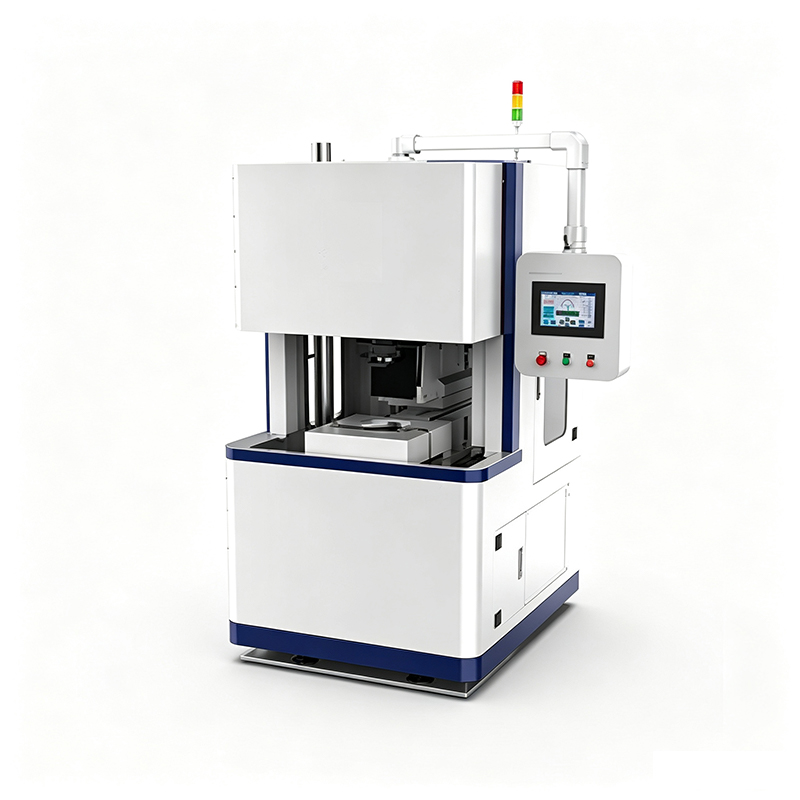
1. What Is a Multi Wire Saw?
You may be wondering: What is a multi wire saw?
It is a cutting machine that features many parallel wires. These wires slice through a workpiece as they move.
In other words, a multi wire saw performs many cuts simultaneously. Each wire produces a single slice.
As a result, manufacturers can use this technology for high-production processing.
Common applications for multi wire saw machines include:
- Silicon
- Monocrystalline silicon
- Polycrystalline silicon
- Silicon carbide
- Sapphire
- Quartz
- Glass
- Ceramics
- Crystals
- Other brittle materials
During semiconductor fabrication, multi wire sawing helps produce silicon wafers.
Operators load a silicon ingot into the machine. Next, the multi wire saw slices many wafers from the original ingot.
Each wafer can enter further grinding, polishing, cleaning, and inspection processes.
So, multi wire sawing represents a key part of semiconductor wafer fabrication.
Multi wire machines typically employ diamond wire. They push the wire through the material at a set speed.
The machine automatically controls wire tension, feed rate, workpiece position, and other factors.
As a result, multi wire cutting offers extremely efficient and repeatable processing.
- Semiconductor Wire Saw Machine
- Silicon Wafer Cutting Machine
- Diamond Wire Saw Machine
2. How Does a Multi Wire Saw Work?
A multi wire saw operates by routing several wires through a material. During cutting, these wires remove stock.
First, a technician mounts the workpiece. Next, the machine initializes the wire array.
This system keeps each wire parallel to the others. The array automatically spaces each wire evenly.
Once complete, the tension system applies the correct amount of force to each wire.
The machine then engages wire motion. At the same time, the feed system pushes the workpiece into the wire array.
Abrasive wires gradually cut through the material. As a result, many simultaneous cuts take place.
Coolant may flow through the work area to help with cooling and debris removal.
Simultaneously, the control system manages various cutting parameters, such as:
- Wire velocity
- Wire tension
- Feed speed
- Cutting depth
- Workpiece position
- Cooling fluid
Once finished, an operator can remove the cut product from the machine.
This process shows that one multi wire saw can make multiple cuts per cycle.
3. Multi Wire Saw Working Principle
Multi wire saws move a series of parallel wires through a material. As they cut, each wire creates its own gutter.
Material gradually disappears as each abrasive wire passes through.
Since wires remain parallel, the spacing between each wire determines slice spacing.
Consequently, slice thickness relates directly to wire spacing.
The cutting action comes from tiny diamond abrasive particles. During cutting, these particles slice into the material.
Simultaneously, the workpiece moves through the wires.
Consequently, multi wire machines produce multiple parallel cuts.
This process has several key advantages:
- One machine can perform many cuts at once
- Wire spacing remains consistent
- Automated tensioning allows for extremely stable cutting paths
- Multi wire machines can process large ingots quickly
Therefore, manufacturers have come to rely on multi wire saw technology.
4. Multi Wire Saw Cutting Process
Multi wire sawing involves multiple steps:
Step 1: Workpiece Inspection
Operators begin the process by inspecting the workpiece.
They confirm the dimensions, material type, surface finish, and cutting specifications.
If applicable, technicians also check the crystal orientation (for silicon).
Step 2: Workpiece Mounting
Next, the technician mounts the workpiece onto the machine.
The fixture provides support while allowing sufficient access to the material.
Mounting the workpiece correctly becomes critical to minimizing deviation.
Step 3: Wire Array Initialization
The machine positions multiple parallel wires. Each wire needs to stay in the correct position.
Operators must ensure that each wire maintains proper spacing.
Step 4: Applying Wire Tension
Next, the machine applies proper tension to each wire.
Appropriate tension helps ensure the wires stay stable during cutting.
Too much tension could increase the risk of wire breakage.
As a result, the machine needs precise tension control.
Step 5: Set Process Parameters
Operators choose settings for various cutting parameters, such as:
- Wire speed
- Wire tension
- Feed rate
They can also set parameters for coolant flow and filtration.
Consequently, the machine can adjust the process to match the job.
Step 6: Start Cutting
The wire array begins moving through the material.
As the wires move, the feed system guides the workpiece through them.
Abrasive wires gradually eat away at the material.
As a result, the workpiece forms multiple slices simultaneously.
Step 7: Cooling and Filtration
Cutting generates both heat and debris. To compensate, coolant travels through the cutting area.
Furthermore, a filtration system removes floating debris.
As a result, the machine can operate under cleaner conditions.
Step 8: Completion
Finally, the machine completes the cutting cycle.
Workers then remove the sawn workpiece from the machine.
Inspectors can inspect the finished wafers or components.
5. Main Components of a Multi Wire Saw
Multi wire saw machines feature several critical components.
Wire Management
A wire management system controls multiple wires.
This system typically controls wire feeding, wire winding, and wire motion.
Since wire movement drives the cutting process, the wire system strongly influences efficiency.
Guide Wheels
Guide wheels determine wire trajectory.
Guide wheels also contribute to keeping wires evenly spaced.
Guide wheel precision strongly influences cut accuracy.
Tensioning System
The tensioning system applies set force to each wire.
Each wire requires stable tension while cutting. If wires sway, it can cause problems.
As such, automated tension control allows for greater consistency.
Feeding System
The feeding system advances the workpiece through the wire array.
Servo-driven motors allow for extremely precise motion control.
Feeding precision strongly influences cut geometry.
Cooling System
Liquid coolant flushes through the cutting area.
The coolant helps remove heat and carries debris away.
Constant coolant flow allows the machine to keep running.
Filtration System
The filtration system extracts debris from the coolant.
In turn, this keeps the coolant consistent.
Control System
A control system monitors and controls machine functions.
Possible controls include:
- Wire speed
- Wire tension
- Feed speed
- Positioning
- Cooling parameters
- Safety features
As a result, automation plays a crucial role in modern multi wire saw machines.
6. Multi Wire Saw for Silicon Wafer Cutting
Perhaps the biggest application of multi wire saw technology is silicon wafer cutting.
Semiconductor producers create silicon ingots as a first step.
Then, they cut these into individual wafers.
Using a multi wire saw, producers make many wafers from each ingot.
A single multi wire saw can create up to 24 wafers at once!
Therefore, multi wire saws offer extremely efficient production.
The process also requires high precision, though. For instance:
- Wafers require consistent thickness
- Manufacturers need to control TTV and surface damage
As a result, things like machine rigidity, wire tension, wire spacing, and feed rate become important.
After wire sawing, wafers usually undergo additional processes. These may include:
- Grinding
- Polishing
- Cleaning
- Inspection
Consequently, the multi wire saw represents only one stage of silicon wafer production.
Nanjing Top Wafer specializes in multi wire wire saw machines for semiconductor and advanced material processing. Our equipment series covers silicon wafer sawing, SiC wafer sawing, sapphire wafer sawing, ceramic wafer sawing, and more.
Nanjing Top Wafer Multi Wire Saw Equipment
7. Diamond Wire in Multi Wire Sawing
Diamond wire sees widespread use in multi wire sawing applications.
The wire features diamond abrasives.
These abrasives give the wire its cutting power. Diamond boasts remarkable hardness.
Thus, diamond wire can cut through tough materials with ease.
Meanwhile, the wire races through the cutting zone.
At the same time, the workpiece slowly feeds into the wire grid.
Abrasive diamond particles slowly eat away at the workpiece.
As a result, manufacturers can produce accurate cuts very quickly.
Diamond wire also lets users use a smaller wire gauge. Small diameter wire leaves less kerf loss.
Less kerf loss allows manufacturers to use more of the original material.
This becomes vitally important when working with high-cost materials like semiconductor wafers.
Take silicon carbide, for example.
SiC is much harder than traditional silicon. As a result, special cutting technology becomes necessary.
Diamond wire offers a suitable method for cutting SiC.
8. Multi Wire Saw Cutting Parameters
Let’s look at some of the cutting parameters you may encounter:
Wire Diameter
Smaller diameter wire leaves less material waste during cutting.
However, small wire requires precise tension control.
Thus, there is a balance between material conservation and process stability.
Wire Speed
Wire speed is how fast the wire moves through the material.
Increasing wire speed can increase throughput.
However, faster wire speed means more wire wear.
Plus, not all materials can handle fast wire speeds.
Thus, the ideal speed depends on the application.
Wire Tension
Wire tension ensures that the wires stay in place.
If the wires move around, it can cause problems.
However, too much tension causes wire breakages.
Automated tension control allows for greatly increased consistency.
Wire Spacing
Wire spacing largely determines wafer thickness.
For this reason, wire placement needs to be precise.
Reduced spacing allows for thinner wafers.
However, the rest of the process needs to match the wafer specs.
Feed Rate
Feed rate is how fast the material passes through the saw.
Increasing feed rate improves output.
However, too much feed rate causes excess stress during cutting.
Thus, finding a ideal feed rate becomes important.
Cooling Rate
The coolant removes heat from the cutting zone.
It also flushes away debris from the cut area.
Therefore, a constant flow of coolant allows for better production conditions.
9. Advantages of Multi Wire Saw Technology
Multi wire saws come with many benefits, such as:
9.1 High Throughput
Many wires cut material simultaneously.
Operators can produce many slices from one cutting cycle.
As a result, multi wire machines are ideal for large volume production.
9.2 Less Processing Time
Each cutting cycle produces more cuts.
Operators do not need to perform as many individual cutting operations.
9.3 Minimal Material Waste
Because you can use thin diamond wire, the kerf becomes very small.
As a result, there is much less wasted material.
This becomes crucial when cutting expensive silicon and SiC wafers.
9.4 Consistent Thickness
Since wires maintain the same spacing, each slice retains uniformity.
Operators can expect very consistent slice dimensions.
9.5 Automated Controls
You can program modern machines to regulate certain parameters.
These may include:
- Wire tension
- Wire speed
- Feed rate
- Positioning
- Cooling rate
- Automatic cycling
Therefore, the machine can produce extremely repeatable cuts.
9.6 Wide Material Range
Multi wire saws work with many different materials.
For instance, you can use them to cut:
- Silicon
- SiC
- Sapphire
- Ceramics
- Glass
- Crystals
As such, a single machine can satisfy many production needs.
10. Multi Wire Saw vs Single Wire Saw
Multi wire saw machines and single wire saw machines both have their place in production.
Multi Wire Saw vs Single Wire
Feature | Multi Wire Saw | Single Wire Saw |
Number of wires | Multiple | One |
Production capacity | High | Lower |
Simultaneous cutting | Yes | No |
Typical application | Mass production | Flexible processing |
Wafer production | Excellent | Suitable for smaller batches |
Process flexibility | High | Very high |
Automation | High | Manual or automatic |
Productivity | High | Moderate |
Research applications | Suitable | Very suitable |
As the table shows, multi wire saws are designed around mass production.
Single wire saws focus on flexible processing.
Choose the right machine to meet production needs.
11. Multi Wire Saw Applications
The application of multi wire saw technology is broad.
Semiconductor Manufacturing
A multi wire saw can cut silicon ingots into wafers. Thus, it finds use in semiconductor production.
Multi wire slicing can produce wafers efficiently. As a result, it has become an important semiconductor manufacturing technology.
Photovoltaic Manufacturing
Solar manufacturers process silicon at a large scale. As a result, production efficiency is critical.
Multi wire technology provides manufacturers with high throughput.
Silicon Carbide Processing
SiC is a hard semiconductor substrate material.
As a result, diamond wire cutting is a suitable SiC processing method.
manufacturers can use multi wire saws to improve SiC production efficiency.
Sapphire Processing
Sapphire is used in LED applications. In addition, it can be used in optical applications and more.
Because of its hardness, an abrasive cutting technology is required to process it.
Multi wire technology can help manufacturers process sapphire efficiently.
Ceramic Processing
Advanced ceramics usually need to be cut precisely.
Therefore, multi wire machines can process certain ceramic materials.
Glass and Crystal Processing
Like ceramics, glass and crystal can also be cut with a multi wire saw.
As a result, multi wire technology can be used for many different materials, not just semiconductor wafers.
12. Multi Wire Saw for SiC and Sapphire
SiC and sapphire are two substrates that need special attention during processing.
Both materials are hard. As a result, they can be difficult to cut using conventional methods.
Diamond wire offers excellent abrasive properties. As a result, diamond wire can cut these materials.
SiC Cutting
SiC wafers are used in power devices. In addition, they are used for high-efficiency electronics.
Thus, the efficient production of SiC wafers is essential.
A multi wire saw can help manufacturers increase their SiC wafer production.
For example, Nanjing Top Wafer lists multi wire SiC cutting applications that support wafer sizes ranging from 2-inch to 8-inch.
Listed specifications for cutting SiC with a multi wire machine include wire diameters ranging from 0.06 mm-0.15 mm as well as TTV of ≤10 μm for certain models.
Sapphire Cutting
Sapphire has many uses because of its hardness and optical transparency.
Therefore, sapphire is used in many high-performance applications.
Just as with SiC, diamond wire can cut sapphire. Therefore, multi wire technology is effective for processing sapphire.
13. How to Choose a Multi Wire Saw
Selecting a multi wire saw requires understanding your process needs.
Identify the material you will be cutting. For instance, you may need to cut:
- Silicon
- SiC
- Sapphire
- Glass
- Ceramics
- Crystals
Next, know the size of the workpieces. Additionally, know what slice thickness you need to achieve.
After that, know how many wafers you need to cut per hour. A high output will require high wire speeds and stable automation.
Don’t forget to consider wire diameter. Next, consider the machine’s tension range.
Make sure the machine can handle the minimum and maximum tension your process requires. Also consider the feed accuracy of the machine.
Also pay attention to the machine’s cooling and filtration systems. These can make a difference in your process.
Lastly, consider how much technical support the manufacturer offers.
A quality supplier should be able to help you with:
- Machine installation
- Machine commissioning
- Ongoing process support
- Operator training
- Supply of spare parts
- After-sales service
Consider every aspect of the equipment package when researching multi wire saws.
14. Multi Wire Saw Maintenance
Preventative maintenance allows for consistent machine performance.
Inspect the wires before starting production is always a good first step.
After that, inspect the guide wheels. Then, check to make sure the wire tension is correct.
Operators should also inspect the machine’s bearings and linear guides.
In addition, the cutting chamber should be kept clean.
Operators should inspect the cooling system regularly as well.
The filtration system will also need maintenance from time to time.
Operators should monitor the quality of the cutting fluid.
After that, pumps and circulation components should be inspected.
Lastly, always keep an eye on your cut wafers.
Fluctuations in thickness or surface quality are signs of machine issues. Preventative maintenance should include both machine inspections and process monitoring.
15. Nanjing Top Wafer Multi Wire Saw
Nanjing Top Wafer Precision Equipment Co., Ltd. is a semiconductor wafer processing equipment manufacturer.
The company specializes in wire saw machines. In addition, they offer multi wire cutting machines as well.
Materials the company lists as being compatible with their equipment include:
- Monocrystalline silicon
- Polycrystalline silicon
- Silicon carbide
- Sapphire
- Glass
- Ceramics
- Crystals
One of Nanjing Top Wafer’s multi wire machines is the MW23 18 Multi Wire Cutting Machine.
According to the company, this machine can handle workpieces that are around 230 × 250 × 180 mm.
The machine accepts wire diameters ranging from 0.04 mm to 0.25 mm. The machine is capable of wire speeds up to 3,000 m/ min.
Suitable materials include monocrystalline silicon, polysilicon, SiC, ceramics, glass, and more.
There are many other multi wire configurations from Nanjing Top Wafer.
As a result, customers can find a machine that fits their material type and production needs.
Visit Nanjing Top Wafer Multi Wire Saw Machines for more options.
Nanjing Top Wafer also offers grinding, polishing, cleaning, and inspection equipment.
Need a complete wafer manufacturing solution?
Take a look at Nanjing Top Wafer Semiconductor Wafer Equipment.
16. Frequently Asked Questions
l What is a multi wire saw?
A multi wire saw is a machine that can cut with multiple wires at the same time.
Because there is more than one cutting line, several slices can be produced during one pass.
l How does a multi wire saw work?
Just like a single wire saw, a multi wire saw passes wires through a material.
While this happens, the feed system feeds the workpiece into the array of wires.
As a result, material is removed by abrasive particles on the wires.
l Can multi wire saw cut multiple slices at once?
Yes, because the wires cut simultaneously.
l What materials can you cut with a multi wire saw?
Many different materials can be cut with a multi wire saw. These include:
- Silicon
- SiC
- Sapphire
- Glass
- Ceramics
- Quartz
Keep in mind, not every multi wire saw is capable of cutting every material.
l Is diamond wire used in multi wire saw machines?
Diamond wire saw machines commonly use diamond wire.
Due to diamond’s hardness, diamond wire is used on hard and brittle materials.
Materials that commonly use diamond wire include:
- Silicon
- SiC
- Sapphire
l What are the benefits of using a multi wire saw?
A multi wire saw can cut more than one wafer at a time.
As a result, they have higher productivity than single wire saws.
l Can multiple wires be used in a wire saw?
Yes, but the machine would be called a multi wire saw.
l Is a multi wire saw used to cut silicon wafers?
Yes. Manufacturers use multi wire saws to cut silicon ingots into wafers.
l Why would you use a multi wire saw instead of a single wire saw?
Multi wire saws can produce more wafers per hour. Therefore, they are better when high production rates are needed.
l How thin can a multi wire saw cut?
Multi wire saws can cut very thin wafers.
For example, Nanojing Top Wafer lists wafer thickness capabilities down to 5μm.
l Can multi wire saw cut silicon?
Multi wire saw machines are used to cut silicon.
Silicon wafers are cut using a multi wire sawing process.
l Can you cut SiC with a wire saw?
Yes, you can cut SiC with a wire saw. However, the machine must be dialed in properly.
SiC is a hard material. Thus, you need to use the correct wire size, tension, speed, and feed rate.
l Can multi wire saw machines cut sapphire?
Diamond wire can cut sapphire.
Therefore, you can use a multi wire saw to cut sapphire.
l Will thicker wire produce thicker wafers?
Not necessarily. But wire spacing has a big impact on wafer thickness.
Thus, if you increase wire spacing, you will get thicker wafers.
l What do you do with wafers after they come out of a multi wire saw?
After the wafers come out of a multi wire saw, they usually go through grinding and polishing.
Then, wafers are cleaned and inspected. Therefore, multi wire sawing is just one part of the overall process.
l What should I look for when buying a multi wire saw?
There are many things to consider when buying a multi wire saw. Here are some things to look at:
- Cutting material
- Maximum workpiece size
- Maximum achievable wafer size
- Desired slice thickness
- Production output
- Cuts per hour
- Required cutting accuracy
After that, consider:
- Wire speed
- Tension ranges
- Degree of automation
- Cooling configuration
- Mach manufacturer’s technical support
Home
17. Conclusion
Multi wire saw machines use multiple wires to cut material.
Multiple wires allow for multiple cutting operations to occur at once.
As a result, multi wire saws have much higher productivity than single wire saws.
Diamond wire is ideal for cutting hard materials.
Therefore, manufacturers can use multi wire saws to cut many materials. These include silicon, SiC, and sapphire.
In the semiconductor industry, multi wire saw machines cut silicon ingots into wafers.
Diamond wire can also cut very thin. Therefore, manufacturers can use thin wire to decrease material loss.
Additionally, wire spacing can be adjusted to produce uniform wafer thickness.
However, there is more to the cutting process than just the wire.
Things such as wire tension, speed, feed rate, machine stiffness, cooling, and filtration are very important.
As a result, you want to find a complete solution that can address all of your multi wire needs.
Nanjing Top Wafer is one company that provides multi wire saw equipment.
Their machines can be used for silicon wafer production. In addition, Nanjing Top Wafer has multi wire saws that can cut SiC, sapphire, ceramics, and more.
Looking for a Chinese multi wire saw manufacturer?
Nanjing Top Wafer is a company that specializes in multi wire saw machines.