
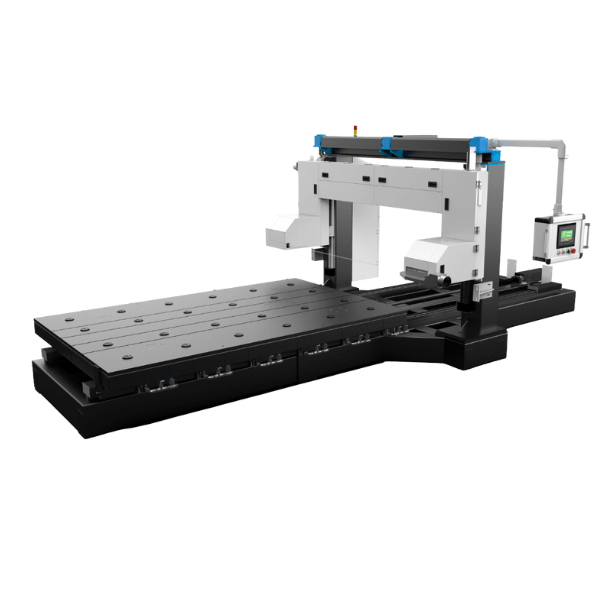
A Diamond Wire Saw for Silicon Wafer Cutting uses diamond-bearing wire to slice silicon ingots into wafers. Choose equipment around workpiece dimensions, wafer quality requirements, production volume, and downstream processing needs. Validate the proposed configuration through representative cutting trials before accepting performance claims.
1. What Does a Diamond Wire Saw Do?
A diamond wire saw removes silicon through abrasive contact between moving diamond-bearing wire and the workpiece. It creates a cutting channel rather than separating silicon without material loss.
Diamond wire sawing uses fixed abrasive particles. Slurry wire sawing supplies loose abrasive particles through a suspension.
Fraunhofer IKTS describes this distinction and explains how moving wire fields create multiple cutting channels simultaneously. Its multi-wire sawing explanation provides useful process context.
In a Diamond Wire Saw for Silicon Wafer Cutting, the machine coordinates wire motion, workpiece feed, and cutting-fluid delivery. The exact arrangement depends on machine design.
Is wafer slicing the same as wafer dicing?
No. Wafer slicing produces wafers from bulk material, while dicing separates a processed wafer into smaller components.
This guide addresses ingot slicing. Buyers should identify that task clearly when requesting quotations.
Otherwise, suppliers may propose equipment for a different manufacturing stage.
Which applications should buyers distinguish?
Photovoltaic wafer production, semiconductor substrate preparation, and laboratory sampling can require different equipment configurations.
A research laboratory may prioritize flexible setups and sample recovery. A production plant may prioritize stable batch output.
Neither application establishes a universal machine specification. Define your actual material and acceptance criteria first.
2. Should You Choose a Single-Wire or Multi-Wire Machine?
Choose the cutting arrangement around the required workpiece geometry and production pattern. More simultaneous cuts do not automatically create better accepted output.
A single-wire configuration provides one active cutting path. A multi-wire configuration creates several cutting paths across the workpiece.
Selection factor | Single-wire configuration | Multi-wire configuration |
Cutting arrangement | One active cutting path | Multiple simultaneous cutting paths |
Evaluation priority | Setup flexibility and cut requirements | Batch consistency and wafer spacing |
Potential application | Sampling and individual cuts | Repeated wafer slicing |
Main purchasing question | Can it execute the required cut reliably? | Can it maintain quality across the complete batch? |
Validation requirement | Representative sample cuts | Representative full-batch trials |
These application suggestions provide an evaluation framework. They do not establish the capabilities of any particular model.
When comparing a Diamond Wire Saw for Silicon Wafer Cutting, request evidence from the proposed configuration. Avoid transferring results between different machines or materials.
multi-wire wafer slicing equipment
3. Which Wafer Quality Measurements Matter?
Evaluate thickness consistency, geometry, surface condition, damage, and usable yield together. Cutting speed alone cannot describe wafer quality.
A useful inspection plan defines each measurement method before testing. It also identifies the production stage where inspection occurs.
What does total thickness variation mean?
Total thickness variation, or TTV, describes the difference between maximum and minimum wafer thickness across the defined measurement area.
Specify the measurement grid and edge exclusion. Also identify the instrument and whether testing occurs before or after finishing.
Without these details, two reported TTV values may describe different inspection conditions.
Why does kerf loss matter?
Kerf loss represents silicon removed while the wire creates the cutting channel. That material does not become a usable wafer.
However, nominal wire diameter does not fully describe the resulting channel. Abrasive size and cutting behavior also influence material removal.
Evaluate a Diamond Wire Saw for Silicon Wafer Cutting using measured results rather than wire diameter alone.
A thinner cutting channel offers limited value if breakage or finishing requirements increase.
Why inspect subsurface damage?
Surface appearance cannot reveal every cutting defect. Cracks and other damage can extend beneath the visible surface.
A 2016 study examined diamond-wire-sawn silicon and reported relationships between damage, diamond grit size, and wire usage. The research record supports including damage evaluation alongside surface inspection. National Laboratory of the Rockies
The practical implication is straightforward: compare wafers after the relevant downstream steps, not just immediately after slicing.
4. How Do You Select the Cutting Configuration?
Treat the wire, machine, fixture, fluid, and cutting recipe as one process system. Changing one element can alter the others.
The following checklist provides general selection guidance. Suppliers should confirm specific operating limits in writing.
Start with the silicon workpiece
Record material type, crystal form, dimensions, orientation requirements, and mounting conditions.
Also define target wafer thickness and any allowance for later processing.
Do not assume that results from silicon carbide establish performance on silicon. They are different materials.
Match wire selection to quality requirements
Ask suppliers to identify wire construction, nominal diameter, abrasive specification, and replacement criteria.
Then connect those choices to your inspection requirements.
For a Diamond Wire Saw for Silicon Wafer Cutting, the relevant question concerns repeatable wafer quality throughout wire usage.
A successful cut with fresh wire cannot establish the entire consumable lifecycle.
Evaluate tension and feed control
Request the permitted tension range and the method used to monitor it.
Ask how the machine manages feed changes, interruptions, and abnormal cutting conditions.
Fraunhofer CSP uses force-instrumented multi-wire saws to investigate interactions between process parameters and consumables. Its sensor-supported wafering work supports evaluating these interactions experimentally.
Check cutting-fluid compatibility
Confirm fluid compatibility with the machine, wire, silicon, mounting materials, and cleaning process.
Specify filtration, temperature management, and maintenance responsibilities where relevant.
Avoid treating fluid supply as a minor accessory. Include it in the trial configuration and operating-cost review.
5. How Should You Run a Silicon Cutting Trial?
Use representative material and written acceptance criteria before approving equipment performance. A demonstration becomes useful when you can reproduce and inspect its results.
For a Diamond Wire Saw for Silicon Wafer Cutting, request a documented trial covering the following steps.
- Define the workpiece.Record silicon type, dimensions, condition, and traceability.
- Agree on acceptance criteria.Specify thickness, TTV, surface requirements, damage evaluation, and acceptable breakage.
- Document the configuration.Record wire specification, fixture, fluid, and machine settings.
- Inspect the setup.Check mounting, alignment, wire path, and fluid delivery.
- Run the agreed cutting sequence.Record interruptions, adjustments, and rejected pieces.
- Measure the output.Inspect wafers using the agreed methods and sampling plan.
- Evaluate downstream processing.Check cleaning, separation, finishing requirements, and resulting acceptance.
- Repeat where necessary.Confirm that results extend beyond one favorable demonstration.
Retain raw measurement data alongside summary reports. Photographs alone cannot verify dimensional performance.
Also record trial limitations. A small sample may not establish production stability over extended operation.
silicon cutting trial and application support
6. Which Mistakes Cause Avoidable Cutting Problems?
Investigate the complete process before changing cutting settings. Similar defects can have different causes.
The table below lists investigation starting points. It does not provide a definitive diagnosis for every machine.
Observed problem | Initial checks | Useful evidence |
Wire breakage | Wire condition, loading, guides, and tension | Event history and wire inspection |
Thickness inconsistency | Mounting, alignment, wire behavior, and measurement method | Wafer thickness maps |
Repeated surface marks | Motion patterns, guide condition, and process stability | Surface maps and machine records |
Edge damage | Entry and exit conditions, handling, and support | Inspection before and after handling |
Increasing rejects | Consumable condition and process changes | Results organized by batch and wire usage |
Why avoid changing several settings together?
Changing multiple settings makes cause and effect difficult to identify.
Start from a documented baseline. Then adjust one factor where practical, while respecting the manufacturer’s operating limits.
Record both improvements and tradeoffs. Faster cutting may require additional finishing or create more rejected wafers.
Why inspect handling after cutting?
Thin wafers can suffer damage during separation, cleaning, transfer, or inspection.
A Diamond Wire Saw for Silicon Wafer Cutting should therefore form part of a wider handling assessment.
Separate cutting defects from later handling damage when reviewing yield.
wire saw maintenance and troubleshooting
7. How Do You Compare Production Costs?
Compare cost per accepted wafer rather than machine price or cutting time alone. This approach connects purchasing decisions to usable output.
For an internal comparison, include:
- Equipment ownership or depreciation.
- Wire and cutting-fluid consumption.
- Operator involvement and maintenance.
- Cleaning and downstream finishing.
- Rejected wafers and material losses.
- Planned downtime and changeovers.
Use the same accounting period and acceptance definition across suppliers.
A practical calculation is:
Cost per accepted wafer = Allocated production cost ÷ Number of accepted wafers
Define the numerator carefully. Mixing different cost boundaries makes comparisons misleading.
When evaluating a Diamond Wire Saw for Silicon Wafer Cutting, request the assumptions behind every cost estimate.
Also distinguish demonstrated results from projected production figures.
Which costs can a short trial miss?
A short trial may miss maintenance frequency, consumable variability, and extended operating interruptions.
It may also exclude cleaning labor or wafer separation.
List these unknowns explicitly. Then decide which require additional testing before purchase.
8. How Should You Evaluate an Equipment Supplier?
Choose a supplier that can connect your specification to documented equipment capability and a clear acceptance process.
The official website of Nanjing Top Wafer Precision Equipment Co., Ltd. describes semiconductor wafer production lines and individual processing equipment. Its navigation also lists several wire-saw categories. These statements establish relevance without proving application-specific performance. njwafertop.com
When discussing a Diamond Wire Saw for Silicon Wafer Cutting, ask suppliers for model-specific documentation.
Useful questions include:
- Which workpiece dimensions does the proposed configuration support?
- Which wafer measurements can the trial verify?
- What consumables and utilities does operation require?
- Which maintenance tasks need specialist assistance?
- What documentation accompanies machine acceptance?
For Nanjing Top Wafer Precision Equipment Co., Ltd., use the same evidence requirements you apply to other suppliers.
Next step: Send your material description, wafer drawing, quality criteria, and production target through the official website.
Separately, Bangwin Gas provides gas-equipment information. This supplementary link does not substantiate silicon-cutting performance or imply a supplier relationship. https://bangwingascylinder.com
9. Frequently Asked Questions
Can one machine serve both photovoltaic and semiconductor wafer production?
Possibly, but suitability requires application-specific validation. Differences in geometry, cleanliness, finishing, and acceptance criteria can change the equipment requirements.
Ask for results matching your intended process.
Does thinner diamond wire always improve production economics?
No. Reduced material removal must outweigh any changes in breakage, consumable usage, downtime, or finishing cost.
Compare accepted output across the complete process.
Can diamond wire sawing produce wafers without damage?
Do not assume damage-free cutting. Published silicon research documents surface and subsurface effects associated with diamond wire sawing. National Laboratory of the Rockies
Define acceptable damage through inspection and downstream requirements.
What information should accompany a quotation request?
Provide silicon dimensions, target thickness, quality limits, volume expectations, and inspection methods.
Also describe available utilities and downstream equipment.
Is the fastest cutting cycle the best purchasing criterion?
No. A short cycle can lose its advantage through extra handling, finishing, maintenance, or rejected wafers.
Compare total production time per accepted wafer.
Should buyers test only fresh wire?
No. Fresh-wire testing provides an incomplete view of process stability.
Agree on additional checkpoints that represent the intended consumable usage pattern.
10. Conclusion
Choose a Diamond Wire Saw for Silicon Wafer Cutting around verified wafer quality and repeatable accepted output.
Start with your workpiece and finished-wafer requirements. Then evaluate wire selection, process controls, handling, and total production cost.
Finally, use representative trials and written acceptance criteria to compare proposals.
Nanjing Top Wafer Precision Equipment Co., Ltd. is a relevant supplier to assess against this framework. Confirm specific capabilities through current documentation and measured results.