
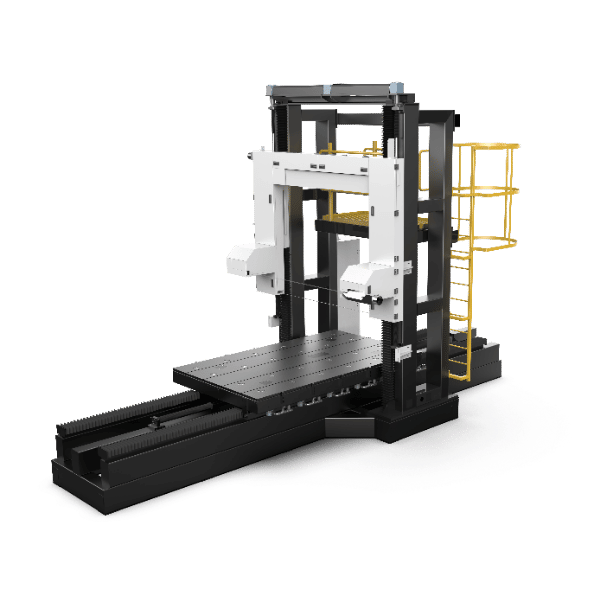
Wire Saw vs Traditional Wafer Cutting requires a clearly defined comparison because traditional methods include several different technologies. Diamond wire sawing uses fixed abrasives, while slurry wire sawing supplies loose abrasives through a suspension. Blade slicing uses a rotating cutting edge; choose among these approaches through measured quality, material recovery, throughput, and cost.
1. Which Cutting Processes Are We Comparing?
Start by identifying the manufacturing operation and the exact competing technology. Otherwise, suppliers may answer different questions with apparently comparable specifications.
This guide focuses on producing wafers or slices from bulk material.
What is diamond wire sawing?
Diamond wire sawing moves a wire carrying fixed diamond abrasives through the workpiece. Abrasive contact removes material along the cutting path.
Single-wire equipment provides one active cutting span. Multi-wire equipment provides several parallel spans for simultaneous slicing.
These descriptions identify cutting arrangements. They do not establish a machine’s accuracy or suitability for every material.
What is slurry wire sawing?
Slurry wire sawing supplies loose abrasive particles through a suspension to the cutting region.
It remains a wire-saw process. Therefore, “wire saw versus slurry cutting” needs a more precise label.
The meaningful comparison concerns fixed-abrasive diamond wire and loose-abrasive slurry wire.
Fraunhofer IKTS explicitly distinguishes these abrasive systems in its multi-wire sawing explanation.
What are blade-based slicing methods?
An inner-diameter saw uses an annular blade with a cutting edge around its central opening.
An outer-diameter saw cuts with the outside circumference of a rotating blade.
A published inner-diameter slicing patent illustrates the annular cutting arrangement. It provides historical design evidence rather than current performance benchmarks.
Is wafer slicing the same as dicing?
No. Slicing creates wafers from bulk material, while dicing separates an existing wafer into smaller pieces.
DISCO describes blade dicing as a process for cutting substrates along designated paths. Its dicing documentation addresses a different manufacturing operation.
A useful Wire Saw vs Traditional Wafer Cutting assessment must keep these stages separate.
2. Wire Saw vs Traditional Wafer Cutting: What Changes?
The main differences concern abrasive delivery, tool geometry, cutting arrangement, and process management. No single distinction determines the final production result.
Use this table to organize supplier discussions.
Comparison factor | Diamond wire sawing | Slurry wire sawing | Blade-based slicing |
Abrasive arrangement | Fixed diamond abrasives on wire | Loose abrasives supplied in suspension | Abrasive cutting edge on blade |
Cutting tool | Moving flexible wire | Moving wire with abrasive slurry | Rotating blade |
Cutting arrangement | Single-span or multiple-span configurations | Commonly evaluated in multi-wire arrangements | Depends on machine and blade configuration |
Consumable review | Wire condition and cutting-fluid requirements | Wire, abrasive suspension, and slurry management | Blade condition and fluid requirements |
Process checks | Wire motion, tension, feed, mounting | Wire behavior, abrasive delivery, slurry condition | Blade alignment, condition, feed, mounting |
Acceptance basis | Measured output quality | Measured output quality | Measured output quality |
The table describes process characteristics rather than a performance ranking.
For example, an established blade process may already satisfy a specialized production requirement.
Likewise, a multi-wire system may suit repeated parallel slicing when the complete workflow supports batch production.
wafer cutting equipment overview
3. Which Process Reduces Material Loss?
Compare measured kerf and total usable material recovery, rather than nominal tool dimensions alone. A narrow cutting channel provides only part of the answer.
Kerf describes the material removed to form a cut. That material does not become a usable wafer.
However, production losses can also include broken slices, rejected geometry, end sections, and finishing allowances.
Does thinner wire automatically improve recovery?
No. A thinner wire may support a narrower kerf, but actual cutting behavior requires validation.
Abrasive characteristics, tool movement, and operating conditions can influence the resulting channel.
Furthermore, additional rejects can offset material savings from a narrower cut.
In Wire Saw vs Traditional Wafer Cutting evaluations, measure accepted output from comparable starting material.
Include downstream losses before declaring one process more material-efficient.
How should you assess finishing allowances?
Record both the as-cut thickness and the required finished thickness.
Then identify how much material subsequent grinding, lapping, or polishing removes.
Two cutting processes can produce different finishing requirements even when their nominal wafer thickness matches.
Therefore, compare material utilization at the same final acceptance stage.
Avoid presenting a theoretical slice-count calculation as demonstrated production yield.
4. How Should You Compare Wafer Quality?
Define quality through measurable acceptance criteria before selecting a cutting technology. “High precision” alone provides no usable comparison.
Different applications assign different importance to thickness, geometry, surface condition, and damage.
Which dimensional measurements matter?
For wafer applications, consider:
- Average thickness.
- Total thickness variation.
- Bow or warp, where relevant.
- Parallelism and orientation requirements.
- Edge condition.
- Finished dimensions after downstream processing.
Total thickness variation describes the difference between maximum and minimum thickness across the defined measurement area.
Specify the measurement grid, edge exclusion, instrument, and inspection stage.
Otherwise, reported results may reflect incompatible measurement conditions.
Why inspect surface and subsurface condition?
A smooth-looking surface does not establish acceptable subsurface integrity.
Your inspection plan should distinguish visible cutting marks, roughness, chipping, and damage below the surface.
Choose evaluation methods that match the material and downstream requirements.
Do not assume any mechanical cutting method produces damage-free wafers.
Can blade behavior affect results?
Yes. Blade mechanics deserve attention alongside wire behavior.
Research on inner-diameter slicing examines blade stress, temperature, transverse deflection, and dynamic stability. These factors belong in a serious process assessment.
For Wire Saw vs Traditional Wafer Cutting trials, use common output criteria while allowing technology-specific operating settings.
Identical settings would not necessarily create a fair test.
wafer quality inspection and measurement
5. Which Process Delivers Better Production Economics?
The stronger economic choice produces accepted wafers at a competitive total cost. Cutting speed and equipment price cannot establish that result independently.
Start with two measurements:
- Accepted wafers per scheduled production period.
- Total allocated cost per accepted wafer.
These measures connect production performance to usable output.
Does multi-wire cutting always deliver higher throughput?
Multi-wire cutting creates multiple slices simultaneously. Fraunhofer IKTS identifies this arrangement as established in silicon wafer production.
However, complete throughput also depends on loading, separation, cleaning, inspection, and maintenance.
A fast cutting stage cannot remove a downstream bottleneck.
Measure the entire workflow under representative operating conditions.
Which costs belong in the comparison?
Include equipment ownership, installation, utilities, consumables, labor, maintenance, and waste handling.
Also include cleaning, finishing, rejects, and changeovers.
Use the following calculation:
Cost per accepted wafer = Total allocated production cost ÷ Accepted wafers
Apply the same cost boundaries and acceptance definition to every option.
Should you replace an existing process immediately?
Not necessarily. An existing process may already deliver acceptable quality and economics.
Replacing it introduces installation, training, qualification, and production-transition costs.
A Wire Saw vs Traditional Wafer Cutting business case should include those costs alongside projected operating savings.
Separate demonstrated trial results from assumptions about future production.
6. Which Applications Suit Each Approach?
Select the process around material, geometry, production pattern, and final requirements. Application labels alone cannot establish equipment suitability.
The following recommendations provide a screening framework rather than universal rules.
What should repeated wafer production prioritize?
Repeated parallel slicing should prioritize batch consistency, material recovery, and complete workflow capacity.
Multi-wire equipment deserves evaluation where its cutting arrangement matches the production objective.
However, verify handling and inspection capacity before increasing slicing output.
multi-wire wafer slicing equipment
What should research and sample preparation prioritize?
Sample preparation may prioritize cut location, mounting flexibility, feature preservation, and changing workpiece geometry.
Single-wire or blade-based equipment may warrant evaluation depending on the specific task.
Request a representative demonstration rather than selecting solely by equipment category.
Can silicon results establish performance on other materials?
No. Silicon, silicon carbide, sapphire, and ceramics require separate application assessment.
A successful trial on one material does not verify another material’s cutting recipe or output quality.
In Wire Saw vs Traditional Wafer Cutting selection, require evidence matching your intended workpiece.
7. How Do You Validate a Process Change?
Run a controlled comparison using representative material and written acceptance criteria. Define success before the supplier starts cutting.
Use these steps:
- Document the baseline.Record current quality, accepted output, costs, and recurring problems.
- Define the workpiece.Specify material, dimensions, orientation, and incoming condition.
- Set acceptance limits.Agree on thickness, geometry, surface condition, damage, and breakage.
- Record each configuration.Identify tools, mounting, fluids, and operating recipes.
- Measure complete workflow time.Include setup, cutting, unloading, cleaning, and inspection.
- Inspect representative output.Use the agreed sampling plan and measurement methods.
- Track all losses.Include rejected pieces, finishing allowance, interruptions, and consumable usage.
- Review repeatability.Repeat trials where initial evidence cannot establish process stability.
What records should you retain?
Keep raw measurements, process settings, material traceability, and interruption logs.
Photographs can support the report, but they cannot independently establish dimensional performance.
Also identify unknowns that short trials cannot resolve.
Examples include long-term maintenance, consumable variability, and extended production availability.
A documented Wire Saw vs Traditional Wafer Cutting trial makes those limitations visible before purchasing.
wafer cutting trials and process evaluation
8. How Should You Evaluate Equipment Suppliers?
Ask suppliers to connect your application requirements with documented equipment capability. General category descriptions cannot replace application evidence.
The official website of Nanjing Top Wafer Precision Equipment Co., Ltd. lists single-wire, multi-wire, and vertical internal slicing equipment.
This product navigation establishes relevance to several options discussed here. It does not prove application-specific performance. njwafertop.com
Ask suppliers to confirm:
- Supported workpiece dimensions and mounting conditions.
- Proposed cutting technology and configuration.
- Utilities, consumables, and cleaning requirements.
- Available trial scope and measurement methods.
- Maintenance responsibilities and training requirements.
- Written machine acceptance criteria.
When contacting Nanjing Top Wafer Precision Equipment Co., Ltd., provide the same specification you send to other suppliers.
Next step: Submit your material description, wafer drawing, production target, and inspection requirements through the official website.
Request evidence against those requirements before accepting a process recommendation.
9. Frequently Asked Questions
Is slurry cutting a traditional alternative to wire sawing?
Slurry wire sawing is itself a wire-saw process. The clearer comparison distinguishes loose-abrasive slurry wire from fixed-abrasive diamond wire.
Specify that distinction in quotation requests.
Does diamond wire cutting eliminate kerf loss?
No. Abrasive cutting removes material to create a channel.
Evaluate measured kerf together with breakage, rejected wafers, and downstream material removal.
Can a wire saw replace a wafer dicing saw?
Do not assume direct replacement. Ingot slicing and wafer dicing address different manufacturing stages.
Define the required operation, geometry, and device-protection requirements before comparing equipment.
Are blade-based methods automatically outdated?
No. Age alone does not determine process suitability.
An established process may remain appropriate when it meets quality, capacity, and cost requirements.
Which method produces the smoothest wafers?
There is no universal answer across materials and equipment configurations.
Compare measured roughness, geometry, damage, and final finishing requirements using representative samples.
Should both processes use identical cutting settings during testing?
No. Each technology may require a different operating recipe.
Keep the workpiece requirements, acceptance criteria, reporting boundaries, and inspection methods consistent.
What information helps a supplier recommend equipment?
Provide material specifications, workpiece dimensions, target thickness, production volume, and quality limits.
Also describe your current process, downstream operations, utilities, and production constraints.
10. Conclusion
Wire Saw vs Traditional Wafer Cutting requires a defined baseline and measured production evidence.
First, distinguish diamond wire, slurry wire, and blade-based slicing. Then compare kerf, wafer quality, finishing requirements, and accepted output.
Finally, assess total cost and validate the proposed process through representative trials.
Nanjing Top Wafer Precision Equipment Co., Ltd. lists several relevant equipment categories. Confirm the selected model’s capability against your specific application and acceptance criteria.